Thursday, 18 December 2014

Audience for Short Film in general


Target Audience

The short film industry's audience is quite specific compared to that of a full length film. The 2 main groups of people who will be familiar with short films are unemployed students seeking a future in the film industry and the people who are already successful among the industry.

Demographics

The professional and investors who are employed in the industry may be looking at the short films to find potential in a director, producer or writer to work for them for the particular company. The student sector, a majority of them would be unemployed. They would be viewing the films for inspiration for their own work as an amateur film make. A majority of these films would be familiar with the use of the internet, i.e Youtube.

Psychographics

The audience for short films would be completely different to that of mainstream films. There are many different types of categories within the audience for short film. Some of these categories could be:

  • SUCCEEDERS: These are people who tend to think they are in control and are powerful, successful and ambitious. This group is mainly driven by their income wanting to get their foot in the door of the industry. If they are already successful and are in a powerful position then they would be the type to invest in a new director from viewing a short film and therefore bring more money into their company.
  • ASPIRERS: These are the type of people who want a bigger and better lifestyle. These types are usually of the younger generation who may have probably just finished university with a degree and want their big break into the film industry. Because they want a bigger and better lifestyle, they would probably be watching a lot of short films to get a better understanding about them and they could possible get inspiration for their own short film and eventually get recognised.
  • INDIVIDUALISTS: These are the people are the indepentent thinkers who want to be separate from the crowd. This sector of the audience could include people who just like to express their own opinions and views through the art of film.

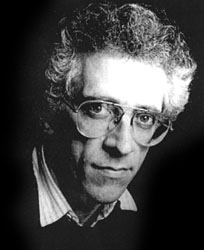
Tzvetan Todorov's Theory of states of equilibrium and disruption


Tzvetan Todorov was a Bulgarian literary theorist who suggested that most narratives start with a state of equilibrium in which life is 'normal' and the protagonists are happy. This state of normality is disrupted by an outside force, which has to be fought against in order to return to a state of equilibrium. This model can easily be applied to a wide range of films.


Claude-Levi-Strauss Binary Opposite Theory


Claude Levi-Strauss was a social anthropologist who studies the myths of tribal cultures. He examined how stories unconsciously reflect the values, beliefs and myths of a culture. These are usually expressed in the form of BINARY OPPOSITES. His research has been adapted by media theorists to reveal underlying themes and symbolic oppositions in media texts.


He believed that in every narrative, there was a conflict between two qualities or terms. The reason for binary oppositions is that it can help establish who the 'good' and the 'bad' characters are instantly. They are obviously present in narratives because fundamentally a narrative must be based on a conflict of interest, i.e the interests of the Hero versus the interests of the Villain.


For example in 1970's Western films: The Binary Opposites of the HOMESTEADERS VS NATIVE AMERICANS:


HOMESTEADERS:


  • Christian
  • Domestic
  • Weak
  • Garden
  • Inside Society
NATIVE AMERICANS:

  • Pagan
  • Savage
  • Strong
  • Wilderness
  • Outside Society

Barthes' Narrative Codes

Barthes' Narrative Codes

 Roland Barthes developed 5 different codes that apply to films in general in order to be considered a 'good' film, which include:

  • The Enigma Code
This is something that the audience do not know, in order to build up the tension and suspense within a film, especially the thriller and horror genres or even just any genre in general. Below is a teaser picture from the movie 'Shutter Island'


  •  The Semantic Code
This code is applied to the props that are used in the film, to represent certain concepts and ideas such as wealth. Examples of props which are used to represent wealthy characters are items such as luxury cars, mansions, jewelry and their status within a society. Below is an still from 'Scarface' to show the character: Tony Montana's excessive wealth.


  •  The Action Code
This is referred to an action that the audience can see on screen that isn't explained, e.g in a horror film, a character could be shown running away or maybe even towards something that the audience do not know about. This will build the tension and suspense as the audience are left with unanswered questions that they want to find the answers to i.e Why are they running? Are they innocent or guilty? This is turn makes them stay throughout the film, in order to find out. Below is a scene from 'The Shining'. This scene shows a young boy cycling down a corridor, minding his own business, then he comes across these 2 girls, and the this is the first time the audience have seen them, so they would have questions as to where they came from and how did they get there, as there are only supposed to be 3 people staying in the hotel grounds.


  • The Symbolic Code
This refers to a structure that portrays the meanings through the use of binary opposites, or stereotypes which go against the usual traits and concepts that an audience may have of a film, which include the characters, location., etc... The scene below from 'Kick-Ass' shows stereotypes that go against usual film concepts, the main character, Dave, portrayed by Aaron Johnson is seen as a weak, geeky teen, who dresses up as a superhero and tries to fight against crime in his neighbourhood without any superpowers whatsoever.


  • The Referential Code
This code delves deeper into the audience's wider cultural knowledge, morality and ideology.


Narrative in Short Films

Narrative

What is Narrative?

The way in which a story is told in both fictional and non-fictional media texts.

The narrative of most short films usually include twists and turns in order to make the short film more interesting due to the length of the film, therefore it needs to be enjoyable for the audience, it needs to keep them entertained. 

One of the differences between the narratives of short and feature films is that in the full length ones, there is more tension and suspense as they have the time to full develop a storyline and the characters as well and then the director portrays a shock ending, leaving the audience surprised, which in turn, keeps them interested in the film, however short films haven't got that much time, so everything is condensed to about 5 minutes worth of film, so in order to keep the audience entertained, one must have an enigma, as everything else is going to be too short to explain.
Like the plot twists at the end of 'The Others';

Friday, 12 December 2014

Typical titles and credits associated with the thriller genre

This week we are looking at how to make titles and credits for our short film in order to make it look more professional and more something that people will think is a professional piece of short film.

Brainstorm

This is a picture of our brainstorm of ideas relating to what we were thinking of doing in terms of the narrative.
We both had different ideas and we wanted to come up with a way that could combine the 2 ideas and make it into an interesting short film for the audience.

Wednesday, 3 December 2014

Forming our concept

Forming our concept

PREZI


Major Influences

Inspirations and Ideas

The main inspiration which we drew on from is Ed Sheeran's 'A-Team Video' which is shot in black and white and it portrays a young, helpless woman and is similar to our main protagonist.


Production Schedule part 1

Siobhan and I formed a timetable and aim to stick to it and create personal targets and aims for us both to reach in order to create a good short film.


Week 9,
locations: Flats & the park
·         Establishing shots of where Kelly lives
·         A deal behind her flat
·         A scene showing a possible fatal reaction she has when taking the drugs
Week 10, locations: a party
Flashback scene to the party that started the addiction-
·         Someone offers her a pill, she refuses and they spike her drink
·         Kelly taking more drugs from that point
·         Her in a state of hallucinating
·         More flashbacks to other situations of her being under the influence

Week 11,  locations: bedroom & the bridge
·         Kelly waking up to a string of threatening angry texts from her dealer
·         Her walking out of the flat to be surprised and attacked by him
·         Later in the day, waiting for him at the bridge
·         Shot of his car pulling up then darkness.